Learn about the origins of shichimi and Nara's herbal culture
Yamato Aroma Shichimi Blending Experience
A Workshop for All Five Senses, Made with Nara Botanicals and Yoshino Cedar.
Choose from Nara-grown botanicals and aromatic ingredients, grind them in a Yoshino cedar mortar, and blend a shichimi that is entirely your own. Focusing on aroma offers a quiet, restorative pause and an opportunity to reconsider the relationship between food and wellbeing.
Experience
The Experience
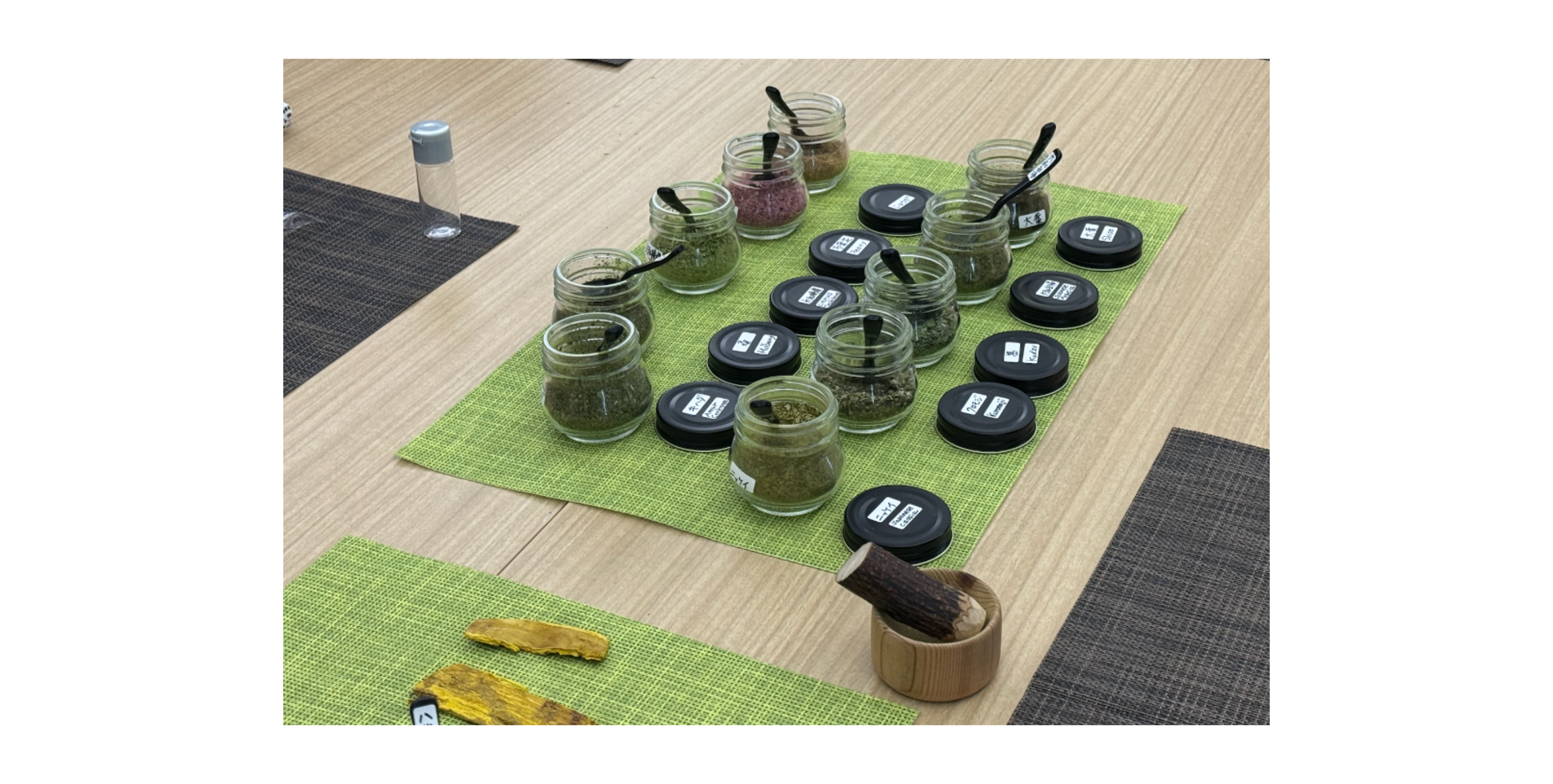
Explore the aromas of approximately fifteen ingredients from Nara
Grind the botanicals in a Yoshino cedar mortar
Choose the blend through your own senses
Take home your one-of-a-kind Yamato Shichimi
Value
What the Experience Offers
01
A mindful moment that engages all five senses
02
An encounter with Nara's herbal culture, food culture, and craftsmanship
03
Accessible to participants of different ages and backgrounds
04
Enjoyable without specialist knowledge
05
Adaptable to programs focused on regional resources, wellbeing, food education, and cultural experience
Materials
Nara Ingredients Used in the Shichimi
The ingredients used in the Yamato Aroma Shichimi-Making Kit and the stories behind them.
Yoshino Craft
Yoshino Cedar Chopstick Workshop Kien
Kobo Kien creates the cedar mortars and Kuromoji pestles used in the experience. The workshop is based in Shimoichi, the birthplace of Yoshino cedar split chopsticks.
Recognized as one of Japan's three most beautiful forest regions, Yoshino cedar is known for its fine growth rings, appealing color and aroma, and resilient character. Kobo Kien makes full use of offcuts left after construction timber is produced, carrying forward the wisdom and techniques of earlier generations while taking on new ideas.
Nara botanicals and spices, a Yoshino cedar mortar, and a Kuromoji pestle came together in this collaborative handmade shichimi kit.
Background
How the Shichimi Came to Be
Kyoto, Nagano, and Tokyo are well known for shichimi. It is said to have begun as a blend of seven carefully selected ingredients inspired by traditional herbal medicine.
Southern Nara was the setting of historical herb-gathering events. The idea began with a question: what if Nara had a distinctive shichimi made from its own botanicals? Yoshino cedar, one of Nara Prefecture's celebrated materials, then became part of the collaboration.
Making the blend by hand encourages curiosity about the botanicals and allows each participant to adjust the aroma and heat. The aim is a shichimi made entirely from Nara ingredients that can be enjoyed for both flavor and fragrance.
The Blending Process
The experience begins by placing sansho in a Yoshino cedar mortar, then pounding, crushing, and grinding it with a Kuromoji pestle. The remaining ingredients are blended in afterward.
Scene
Ideas for Business and Group Programs
Local-government events promoting regional resources
Corporate health and wellbeing programs
Employee training and team building
Tourism and cultural experience events
Lectures and experiential classes for schools, universities, and educational institutions
Programs at department stores, commercial facilities, and hotels
Format
Program Formats
Programs held in Nara
Traveling programs in other prefectures
In-depth experiences for small groups
A lecture combined with a workshop
Program content, duration, and group size available for discussion
Proof
Selected Activities and Recognition
Early-stage inquiries are welcome. You can contact us even if the purpose, number of participants, venue, or preferred date has not yet been decided.